On behalf of my family and Global Peace International, I extend our deepest condolences to the family, friends, and comrades of General Hmayak Haroyan. We pray that God grants them comfort and strength in their grief. May he rest in peace, and may the earth rest lightly upon him.
Թող հողը թեթև լինի նրա վրա։
Major General Hmayak Haroyan, a veteran of the first Artsakh war, a brother-in-arms of Monte Melkonian, and a former deputy defense minister of Armenia, passed away on November 11, 2026, at the age of 77.1
Haroyan played a vital role in the investigation into Monte Melkonian’s killing. That investigation was begun in response to Monte’s father, Charlie Melkonian, on Thanksgiving Day of 1998, while the Melkonian family was visiting Martuni. Haroyan had spent years investigating the circumstances himself, knew the people involved, and shared findings I had not uncovered. His findings and his analysis of the evidence around Monte’s death are found in my book, Go Die, Come Back, So I Can Love You («Գնա մեռի՛ր, արի՛ սիրեմ»): The Killing of Monte Melkonian, the Loss of Artsakh, and the System That Threatens Armenia’s Existence. The book also examines failures of military leadership and accountability that I argue contributed to the loss of Artsakh.
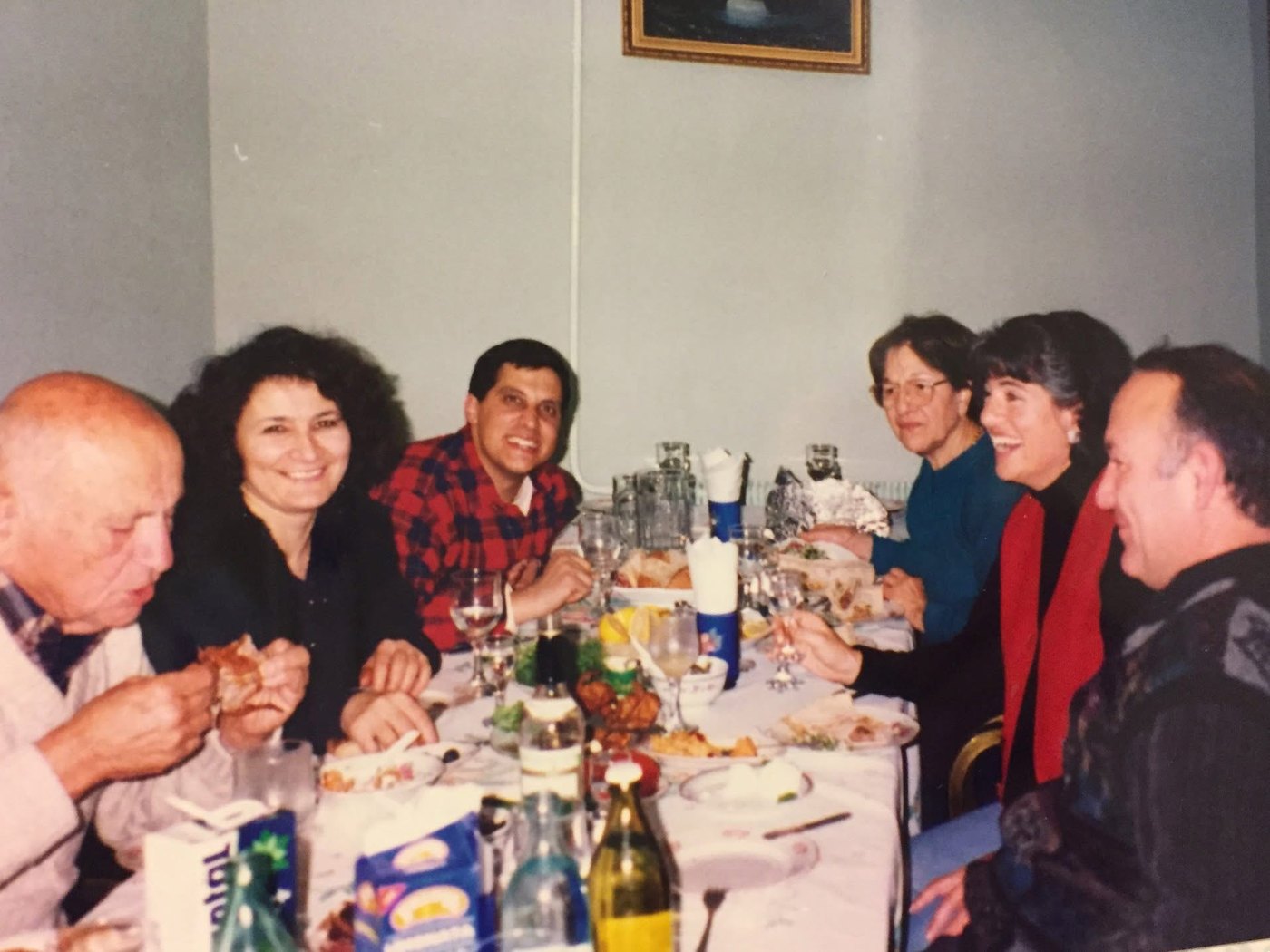
Before describing our work together, I want to share why my family will always remain indebted to him.
In 2003 my cousin’s son Dikran, the great-grandson of Shahan Natalie’s youngest sister, was serving as a communication specialist at an Armenian military base in Dilijan when his commander beat him severely. He was bedridden, and for a week his parents were not allowed to see him.
When his father was finally let in, he confronted the commander and warned that if the abuse happened again, he would personally punish him. From then on the commander bullied Dikran.
I learned of the beating weeks after it happened. Dikran’s father told me there was no need for me to take action, because he had resolved the issue. I felt uncomfortable leaving it there, and that evening I telephoned General Haroyan. I asked him to call the commander and warn him not to harm Dikran again. If there were grounds for disciplinary action, it should be handled through proper procedures.
Haroyan was upset by the abuse of a soldier, and especially by the abuse of a descendant of Shahan Natalie’s family. He made the call at once.
I did not know that Dikran was in trouble again at that very moment. As I learned afterward, his commander had ordered him to produce ten radios from the communication storage. The radios did not exist. He was mocked and told he must “birth” them, broken ones included, or face punishment. Our family understood the order as retaliation, with the threat of a theft charge that could have sent him to prison.
Half an hour later, Dikran was called back in. He expected more punishment. Instead he found the same commander a different man. The commander apologized, greeted him with endearing words, said it had all been a misunderstanding, and said he would find the radios himself. Another communication specialist later told Dikran that a call had come in for the commander. Dikran was not bullied again.
Haroyan had taken notice of the commander. As I later learned, the commander was subsequently caught stealing fuel and falsifying records. Unused projectiles had been buried and reported as expended during training exercises that never occurred. The fuel recorded as consumed during those exercises had been stolen. He was eventually prosecuted and jailed.
I share our family’s story to describe the Haroyan I knew. I heard similar accounts from others he had helped. He intervened quietly, without seeking recognition or attention. There was a job to be done, and he did it.
There was another occasion I remember.
On one June 12, a gathering was held for a meal at Avo’s Spring, which Haroyan built in Monte’s memory. I had been invited in previous years. By then, my human rights work had made me unpopular with some officials. Earlier that year I had forced the Prime Minister of Artsakh, Anoushavan Danielyan, to remove three officials in Martuni who had been considered untouchable: the governor, the police chief, and the prosecutor. That year I was not invited.
Haroyan sent word asking me to come see him and drop something off.
When I arrived, the meal had concluded, and many of those present had become intoxicated. Haroyan called me over to sit beside him. He invited me to eat and, with a wink, asked me to make a toast.
I toasted the leadership, expressing the hope that whatever they did would bring at least a 10 percent benefit to the people.
The new prosecutor, who had replaced the one I had removed and who had been drinking, added to the toast. He agreed with me and said that our leaders were not leaders.
In the days and weeks that followed, the prosecutor had to fight to keep his position. He succeeded. He and I became friends and began working together in the background.
That cooperation began because Haroyan invited me to sit beside him. It also led to greater cooperation with other officials, who saw that they could speak the truth and withstand retaliation from the leadership.
Born on January 9, 1949, in Areg, Haroyan graduated from the Kharkov Higher Military School. He took part in the fighting in Tavush and Martuni, commanded the Eastern task force in 1992 and 1993 and the Southern task force in 1993 and 1994, was wounded in 1993, and returned to the front. From 1994 to 1998, he served as deputy defense minister responsible for armaments. He later served as Armenia’s military attaché in Russia and headed the Department of Emergency Situations.2
Artillery commander Felix Poghosyan recalled that Haroyan remained in Martuni after other visiting officers returned. He described Monte and Haroyan working together, with Haroyan contributing his experience as a Soviet-trained officer.3
He once took a bullet in Monte’s place. In the spring of 1993, on their way to plan the Kubatlu operation, the two of them came up against a sentry from Hadrut posted over the cannabis fields. The man was drugged. Monte shouted at him, and the more Monte shouted, the more frightened the sentry became, until his rifle came up. Haroyan was watching the man’s eyes. He shoved the barrel down as it fired, and the round went into his own leg.4
Haroyan continued examining Monte’s death for years. When we worked together, we compared his findings with my interviews, documents, and observations. He provided information about people and events that I had not obtained elsewhere.
We reviewed evidence and witness statements together. He helped assess accounts against military procedures, weapons capabilities, command responsibilities, and conditions on the battlefield. I did not have his military training or experience. His explanations helped me identify inconsistencies, distinguish firsthand accounts from hearsay, and recognize details that required further investigation.
His work contributed substantially to the findings presented in Go Die, Come Back, So I Can Love You.
In our August 20, 2010 interview, Haroyan described attempts on Monte’s life connected to Monte’s opposition to marijuana cultivation and the movement of cognac. He spoke of shooting and of tampering with Monte’s vehicle intended to cause a crash.5
He also described threats against himself. During an operation to uproot and burn cannabis, a man approached him with a grenade and threatened to kill them both. Haroyan said his vehicle had been stolen to obstruct him. He recalled a woman in Gishi protesting that the destruction of the cannabis would deprive her children of their livelihood.
These accounts are included in the book as his testimony. We compared accounts of threats against Monte with other witnesses’ statements and examined them separately from the evidence concerning the fatal encounter on June 12, 1993.
Haroyan disputed the claim that Monte’s UAZ had burned. He told me he had examined the vehicle repeatedly and had seen no evidence of fire.
He also discussed the removal of vegetation around the wall at Merzuli, where Monte was killed. In September 2007, he told me he had photographs showing the location before it was cleared. Those photographs had not been located when the manuscript was prepared.6
Haroyan’s information came from his own experiences and inquiries as well as our examination of the material I had collected. He helped establish which accounts were consistent with the available evidence and which remained uncertain. His contribution extended beyond the passages that quote him directly.
The book examines Monte’s death alongside failures in military reporting, training, supply, and command accountability. It argues that the failure to correct these practices contributed to the weakening of the institutions responsible for defending Artsakh.
The conclusions and proposals are mine. Haroyan’s findings and military knowledge helped inform them. The book addresses changes needed to reduce our vulnerabilities, strengthen our defenses and military capabilities, and pursue the reversal of Artsakh’s loss.
In my experience, Haroyan did not tolerate the abuse of soldiers, theft of military resources, or misconduct by senior officers. We were able to work together because he was willing to discuss those matters and examine the evidence.
Our family remains indebted to him for his intervention on behalf of Dikran. I am grateful for his friendship and for the years of knowledge and research he shared with me.
May he rest in peace. May the earth rest lightly upon him.
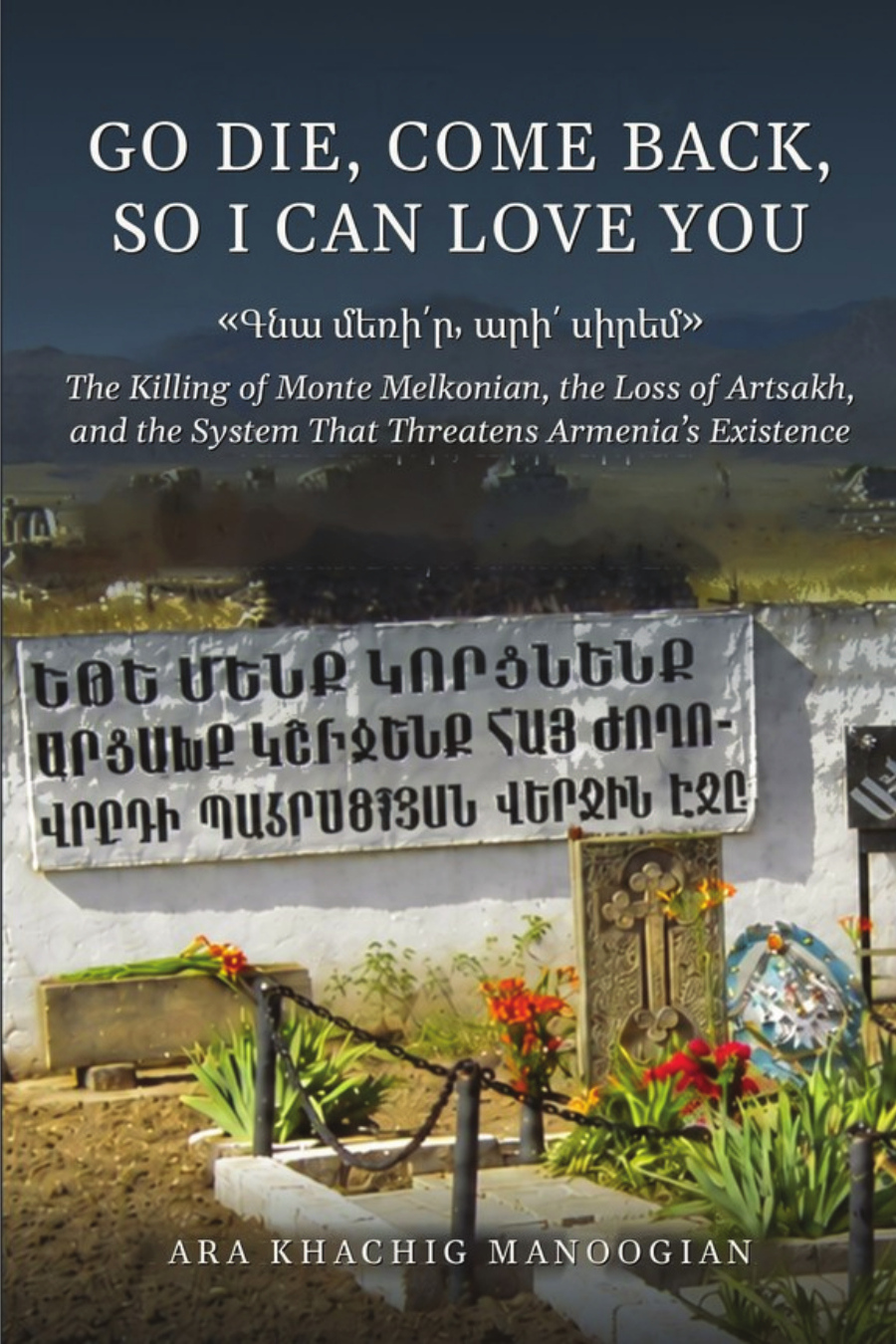
I invite readers to read Go Die, Come Back, So I Can Love You, which preserves his testimony and independent findings. A sample of the book can be read on the book page in the languages of this site. The full book is being translated into Armenian, Russian, French, Spanish, and other languages.
About the Author
Ara Khachig Manoogian is an investigative journalist, author, human rights advocate, and founder of Global Peace International. He is the grandson and last student of Shahan Natalie. His book Go Die, Come Back, So I Can Love You draws on years of interviews and research into Monte Melkonian’s death and military accountability in Armenia and Artsakh.
Source Notes
- ArmInfo, November 13, 2026. https://arminfo.info/full_news.php?id=105838&lang=3
- Biographical account published by 5TV, November 13, 2026. https://news.5tv.am/kyanqic-heracel-e-arcaxyan-arajin-paterazmi-veteran-general-mayor-hmayak-haroyany
- Felix Poghosyan’s recollections, published in Irates, December 4, 2020. https://www.irates.am/hy/1607029768
- Ara Khachig Manoogian, Go Die, Come Back, So I Can Love You: The Killing of Monte Melkonian, the Loss of Artsakh, and the System That Threatens Armenia’s Existence, chapter 22, note 243.
- Manoogian, Go Die, Come Back, So I Can Love You, chapter 19, note 199, citing the author’s interview with Hmayak Haroyan, August 20, 2010.
- Manoogian, Go Die, Come Back, So I Can Love You, chapters 19 and 21; note 236 cites Haroyan’s September 21, 2007 testimony concerning the vegetation and photographs.