
The investigation into the death of Monte Melkonian has concluded after twenty-eight years, and its full report has been published as a book.
The inquiry was initiated in 1998 by Monte Melkonian’s father, Charlie Melkonian, and was carried out by investigative journalist and human rights activist Ara Khachig Manoogian. It did not identify a killer. It identified what Manoogian calls a system inside Armenian structures, one he says is still operating.
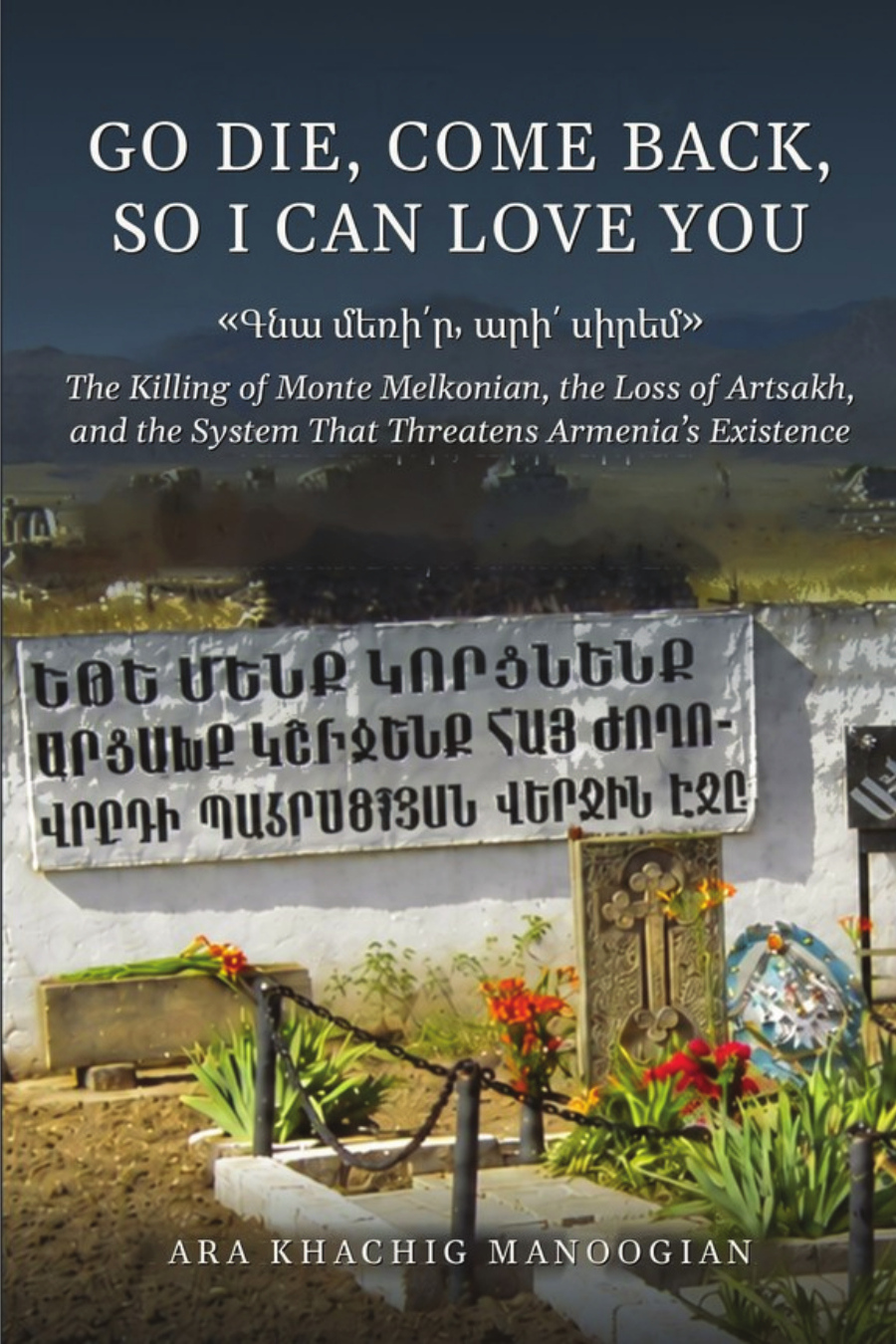
The book, Go Die, Come Back, So I Can Love You: The Killing of Monte Melkonian, the Loss of Artsakh, and the System That Threatens Armenia’s Existence, is published by Global Peace International and is available in the Global Peace International bookstore.
A sentence on a gravel lot
Monte Melkonian, who commanded the Martuni defense region, was killed on June 12, 1993, on a quiet road outside the village of Merzuli. He was thirty-five. Armenia buried him a national hero.
More than two hundred Armenian soldiers were in and around the village that morning. Only one of them was ever asked what happened. No file was opened, and no one has been tried.
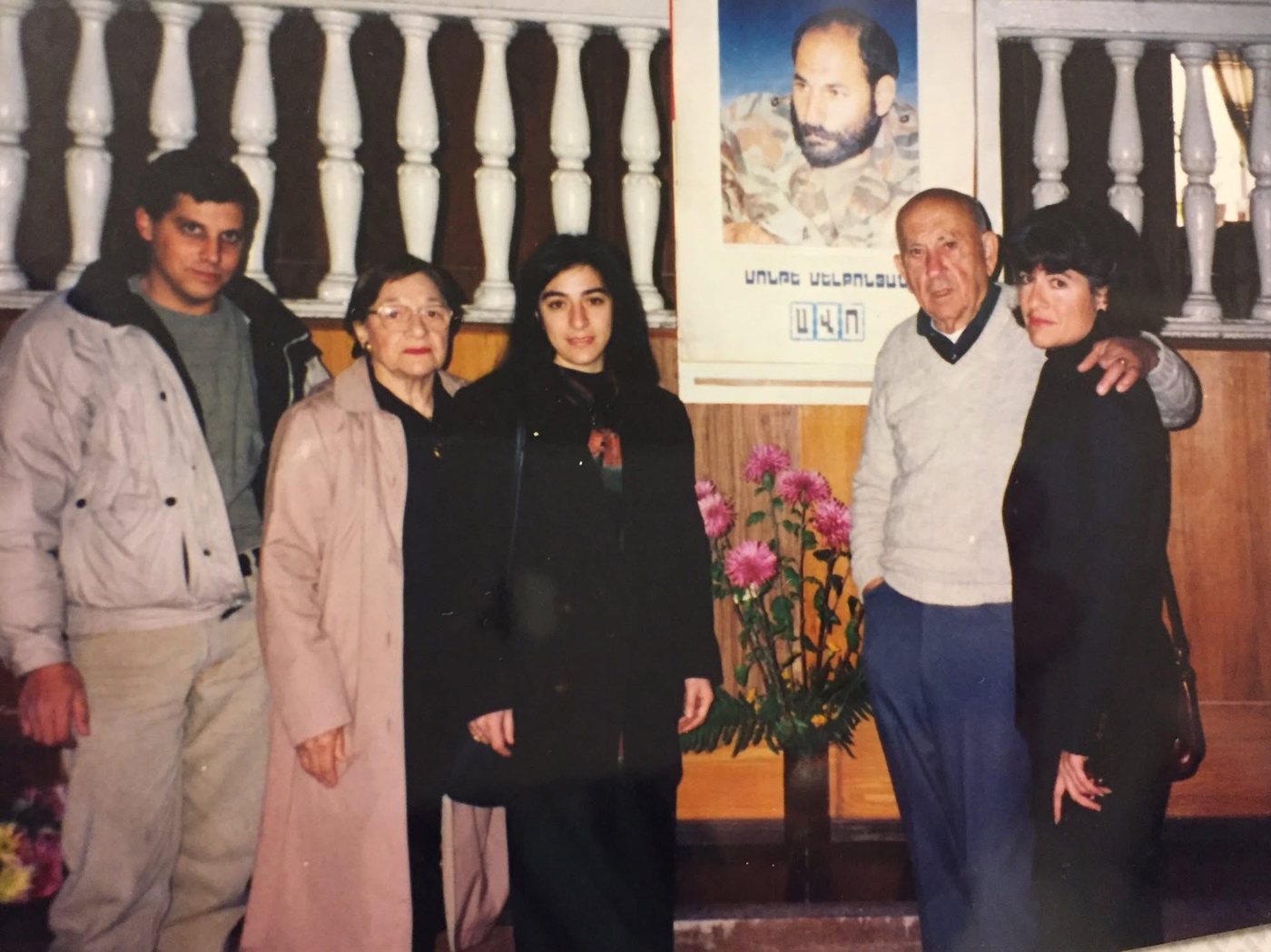
Five years later, on November 26, 1998, American Thanksgiving Day, Monte Melkonian’s family traveled to the site in Artsakh. His father Charlie was eighty, and everyone on the trip understood it was the last time he would stand in Armenia.
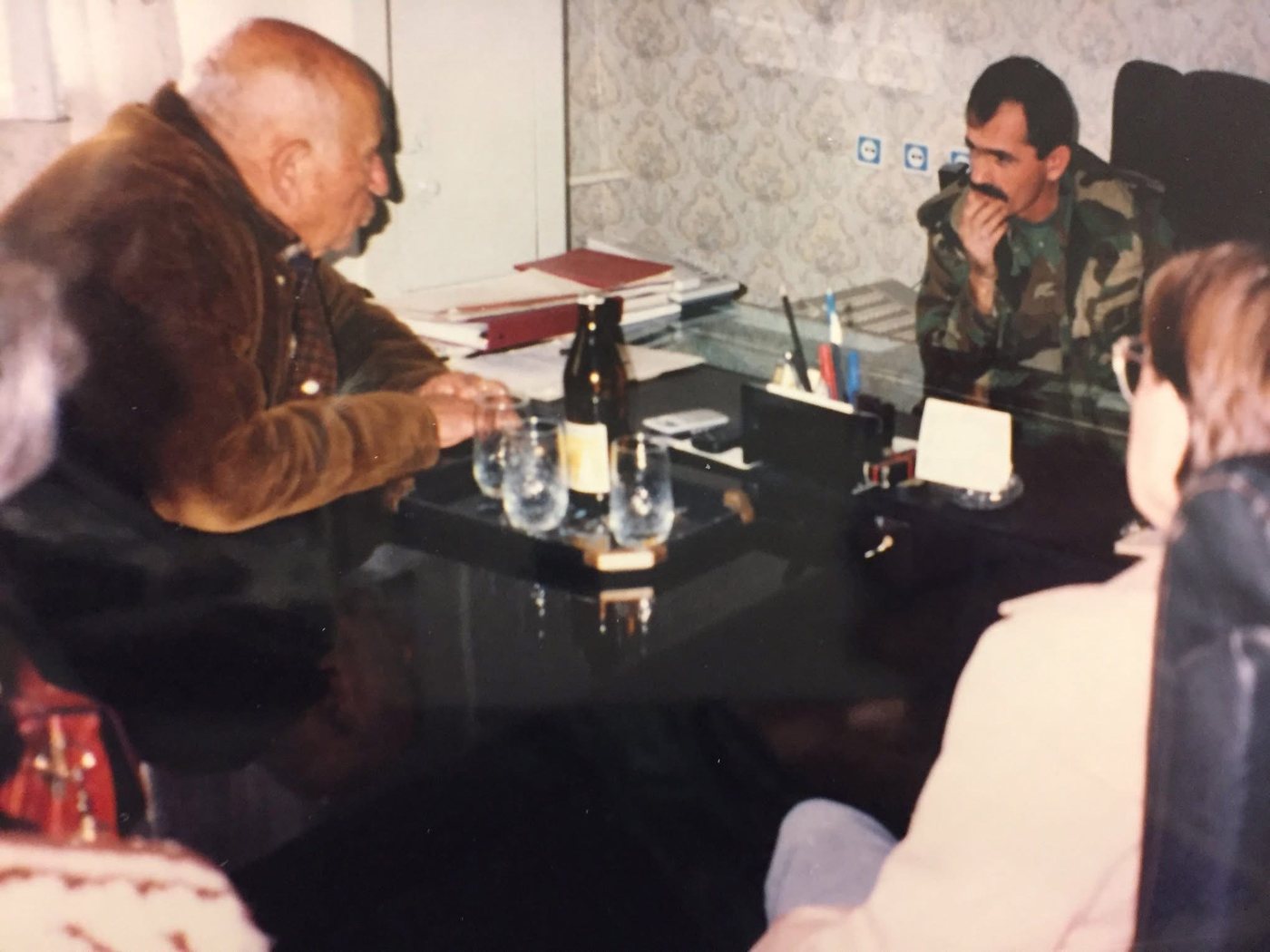
Earlier that day Charlie Melkonian had sat down with Major General Nelson Soghomonyan, who had been responsible for securing Merzuli, the village outside which his son was killed. That conversation is the one the seven words were about.
At the end of the afternoon, walking back toward the car, Charlie Melkonian took the arm of the only person beside him and said seven words about the man who had just finished telling him how his son had died. He said them to no one else on that trip.
The man holding his arm was Manoogian, then thirty-three, a licensed locksmith with a shop in Burbank who had moved to Martuni earlier that year.
The sentence did not land on a stranger to the question. Manoogian had been traveling to Martuni since 1994, and by then the circumstances of Monte Melkonian’s death were already being discussed there.
“On my trips to Martuni, starting in 1994, I was already hearing the chatter about how Monte was killed,” Manoogian said. “People were very upset about the circumstances. I had known since it happened that it was not a simple chance encounter with the enemy, and my nature is to go and find out.”
He answered that if Charlie Melkonian was right, he would get to the bottom of it.
“He never asked me for anything,” Manoogian said. “He did not say find out or promise me. He said his one sentence and fell silent. I answered him. I said that if he was right, I would get to the bottom of it. Everything in this book came out of it.”
Charlie Melkonian had no standing to demand that a case be opened, no prosecutor to call and no expectation that anyone would act. He never asked anyone to investigate, and he died without hearing a single thing the inquiry turned up.
“He was eighty. He knew it was the last time he would stand in Armenia,” Manoogian said. “He did not ask me to do anything. That is what made it impossible to put down.”
“When Charlie spoke those seven words, I knew it was a calling to take action,” Manoogian said. “Here was a man who had given his son, and from studying the war I understood the pivotal role Monte played in the liberation of Artsakh. How could I not step up and provide his father comfort and answers? For me it was a call to duty, and I would like to think any Armenian would have answered it in the same way.”
Twenty-eight years, mostly at kitchen tables
Manoogian did not report the story on visits. He moved to the town Monte Melkonian had commanded and lived there for more than a decade. He married there, stood as godfather to more than a hundred of its children and buried its people.
Almost all of the material in the book was gathered in that town and neighboring villages, in kitchens, from men who had chosen not to discuss it, mostly out of fear.
“I did not fly in to take statements and fly out,” he said. “You do not get these conversations as a visitor. You get them at a man’s own table, ten years later, when vodka is flowing, and his wife finally tells him it is all right to share what they witnessed with me.”
The report also rests on documents, on the physical facts of the road and the radio traffic that morning, and on a four-page account written in 1998, taken out of a safe a decade later and edited in its author’s own hand, with one sentence circled and drawn out into the margin.
For the first time, it sets the Azerbaijani account of that morning beside the Armenian one, drawn from veterans who were firing from the other side.
The evidence appears in the order it was found rather than in the order that would make the strongest case, so that readers reach a verdict before the family’s words are heard.
What it cost to ask
The book almost did not get published. Manoogian says the work came close to being ended more than once over the twenty-eight years, and that a number of attempts were made on his life while it was under way.
In two documented cases the wheel bolts on his jeep, and later on his car, were loosened.
No official inquiry was made into either. Manoogian investigated them himself and says his inquiry pointed to a general in the Armenian army, a man later elevated to Minister of Defense and today held in Baku facing a life sentence. On the second occasion, he says, the general was following close behind him on the road when the wheel came off.
Another episode came in Yerevan in December 2002, in the days before the killing of Tigran Naghdalyan, chairman of the board of Armenian Public Television and Radio, who was shot in the head outside his parents’ house on December 28 and died two hours later.
Manoogian had driven to Armenia from Artsakh a few days earlier. On the road he passed a green Jeep Grand Cherokee he recognized as belonging to the Artsakh Minister of the Interior, traveling with a white Niva carrying men from Martuni. On December 25 the same jeep followed him at a distance as he drove home. Instead of parking where he normally parked, he circled to the street behind and left his car in front of the jeep, which had already arrived, its driver having walked toward Manoogian’s usual parking spot to wait. Manoogian took a position on the steps down to the metro and watched. The driver came out of the courtyard, saw him standing about thirty yards off, and rather than return to the jeep walked off in the opposite direction, as though the vehicle were not his.
Three days later Naghdalyan was killed. Manoogian says the men who carried it out were from Martuni and had come to Armenia in that jeep. At trial thirteen people were charged and seven convicted. John Harutyunyan, a day laborer from Martuni whom Manoogian knew personally and who had done work for him, admitted firing the shot, and the businessman Armen Sargsyan was convicted of ordering the killing, a verdict the opposition disputed at the time.
Two wars
In the months before he was killed, Monte Melkonian was fighting on two fronts, according to the report.
One was against Azerbaijan, and by the spring of 1993 he was winning it. He had reversed a war that four capitals had already written off. Ground that had been given up as lost was back in Armenian hands and being held. The president in Yerevan had asked in writing that the advance be halted and had been refused to his face.
The other was against corruption inside Armenian structures. He burned hemp fields, dumped untaxed wine and stopped the removal of four hundred tons of cognac from a captured village. He made men repay stolen humanitarian aid through the prosecutor, docked the pay of officers who abandoned their posts and refused a bribe in front of witnesses.
Attempts had already been made on his life.
What the inquiry found
The book does not name a murderer, and Manoogian says plainly that the investigation did not find one.
“I went looking for a man. I did not find a man,” he said. “I found an arrangement that protects the unfit, punishes whoever reports them, and edits the record afterward so nobody has to answer for anything.”
The men who ran that arrangement were not removed after 1993, according to the report. They were promoted, and the structure that produced no file and no trial went on to staff the army and make its decisions.
From Merzuli to Stepanakert
In the last months of his life, Monte Melkonian recorded a warning on camera. The fedayi phase was over, he said, and a real army had to be built, one that did not depend on the character of whoever happened to be standing on the hill. Recent success was not final success, and if the Armenian side stayed weak it could lose.
That army was not built.
Monte Melkonian had put the stake plainly. “If we lose Artsakh,” he said, “we will turn the last page of Armenian history.” The line is carried on a banner at the memorial raised where he was killed, and it is on the cover of the book.
“The thing that killed Monte did not stay in 1993. It stayed in the structure, and it promoted the men who ran it,” Manoogian said. “In 2020 it lost Artsakh, and it lost it in the manner Monte had warned us on camera that we would lose it.”
In 2023 the population of Artsakh was removed within days. Since then the Republic of Armenia has lost territory of its own, and what is being sought now is the south, where Armenia borders Iran and where the last road out that does not cross enemy territory runs.
The cost since
The practices documented in Martuni, in which unfit men were protected, honest men punished and records altered after the fact, have gone on costing Armenian lives in every year since, in peacetime as well as in war, the report argues.
“Every year since, families have been handed an explanation that does not survive contact with the facts,” Manoogian said, “and they have had no more standing to force a real inquiry than Charlie had in 1998.”
Rights that belong to a people rather than to a government are being bargained away by men who have never been made to answer for anything, he said, and the record of what has already been given up is being edited as it goes.
What the book asks of readers
The report sets out the evidence and leaves the verdict where Manoogian says it belongs.
“I am not asking anyone to take my word for it,” he said. “I am asking Armenians to read the record, reach their own verdict, and then act like people whose country is still on the table, because it is.”
Charlie Melkonian never received his answer. What he wanted, Manoogian said, was not a private consolation but for Armenians to know what had really happened to his son.
Go Die, Come Back, So I Can Love You is published by Global Peace International of Burbank, California. Paperback $35.00, eBook $11.99. ISBN 978-1-950801-07-7. It is available in the Global Peace International bookstore and on Books.by.
Join the Conversation