We confront the roots of conflict through rigorous research, education, and dialogue — turning recognition into remedy and division into understanding.
On 17 June the Prime Minister of Armenia asked twice, from the floor of the National Assembly, who is left thinking about the destiny of the homeland. Twice he answered himself with a sneer, and pointed at the man who went on hunger strike in 2013 before another country’s president.
Ara Khachig Manoogian’s letter to friends and family: the men he knows in a cell in Baku, the gap he found five weeks ago after 148 years of Armenian effort, and why one word in an act of Congress is the difference between a promise and an obligation. Available in 14 languages.
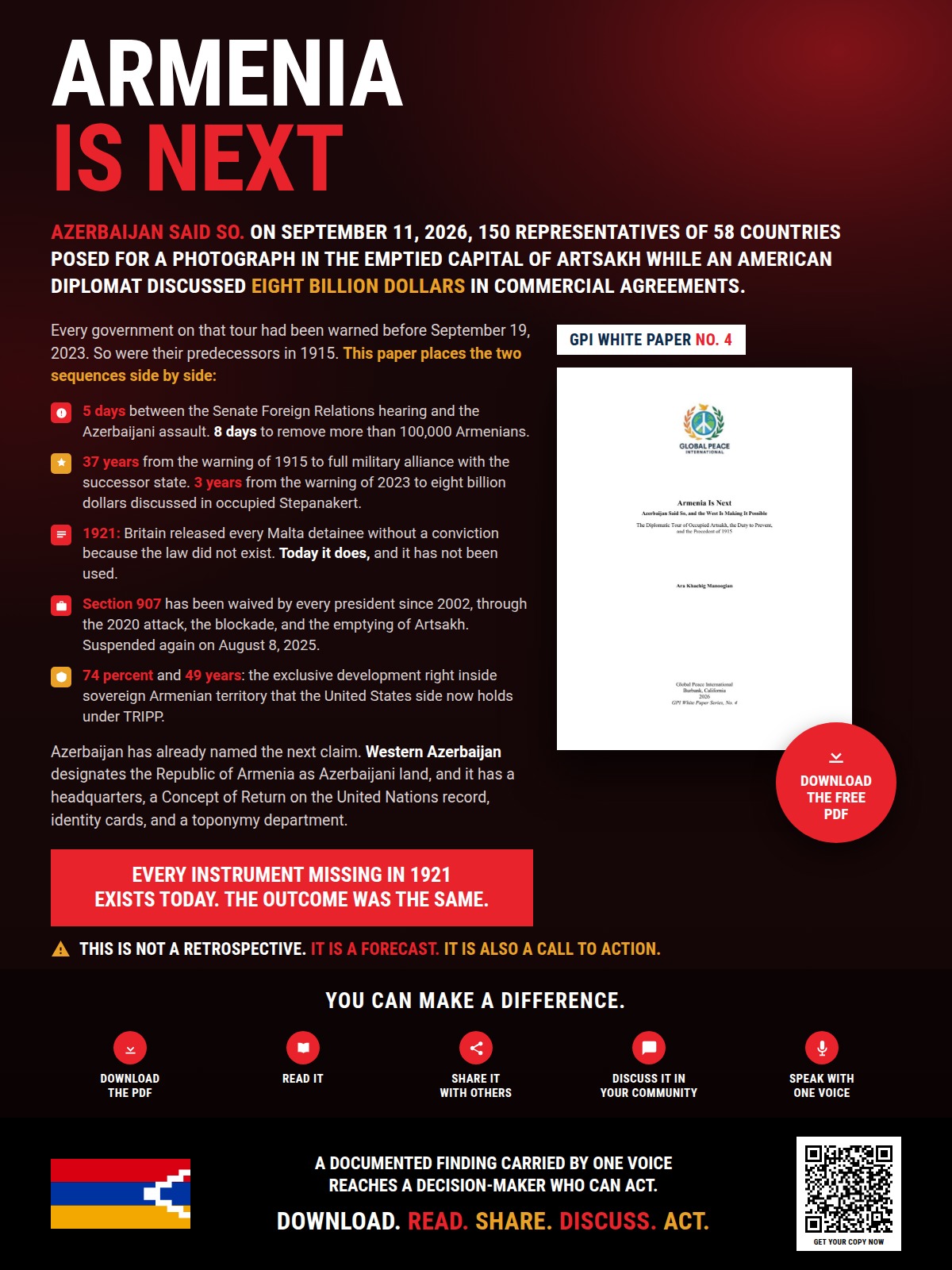
On September 11 and 12, 2026, Azerbaijan drove roughly 150 representatives of 58 countries and nine international organizations into occupied Artsakh, assembled them in front of a Victory Arch in the emptied capital of Stepanakert, and photographed them. The United States chargé d’affaires used the occasion to discuss more than eight billion dollars in commercial agreements and the continued suspension of Section 907.
Every government represented on that tour had been formally warned of a serious risk of genocide before September 19, 2023. Azerbaijan attacked five days after the Senate hearing that followed, and more than 100,000 Armenians were gone within eight days. This paper sets that record beside the sequence that began in 1915, when the same powers promised personal responsibility for crimes against humanity and civilization, then released every Malta detainee without a conviction and arrived at full military alliance with the successor state thirty-seven years later. From the warning of 2023 to eight billion dollars discussed on the ground in occupied Stepanakert took three.
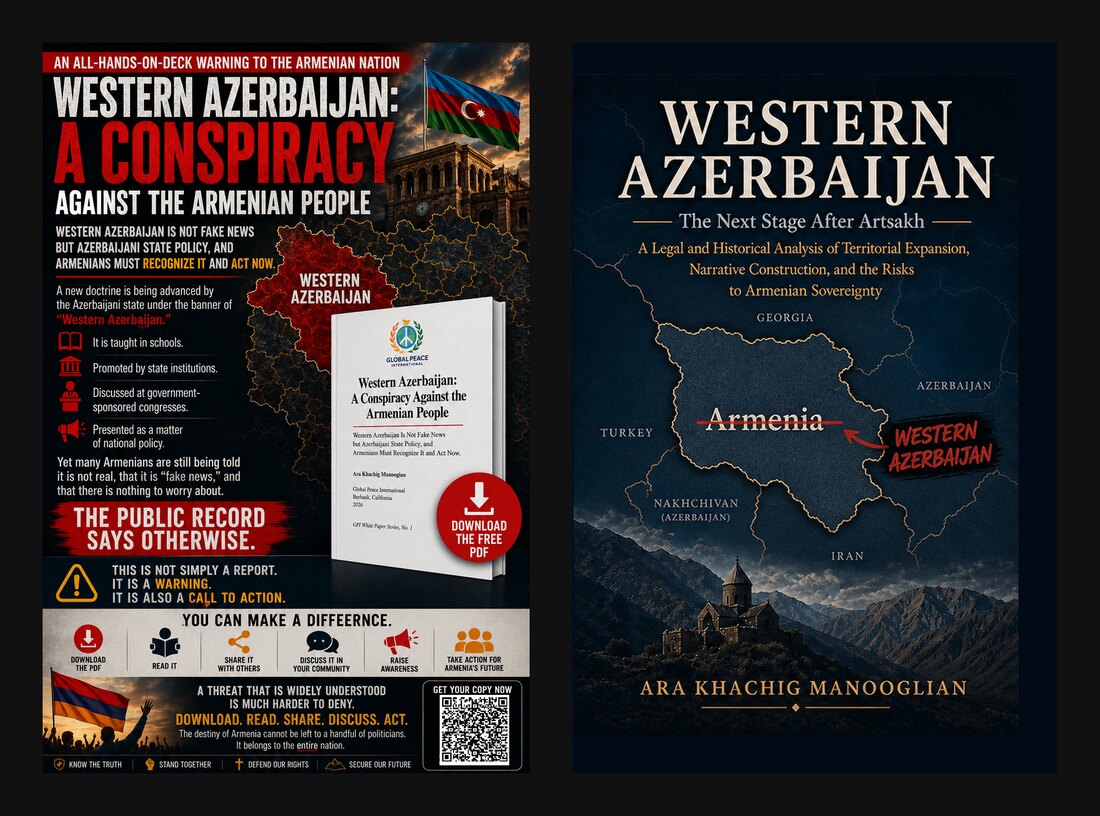
After the 2023 depopulation of Artsakh, Azerbaijan’s doctrine of “Western Azerbaijan” has turned Armenia itself into a declared target. Our latest study traces how rhetoric becomes state policy — and what it means for Armenian sovereignty.
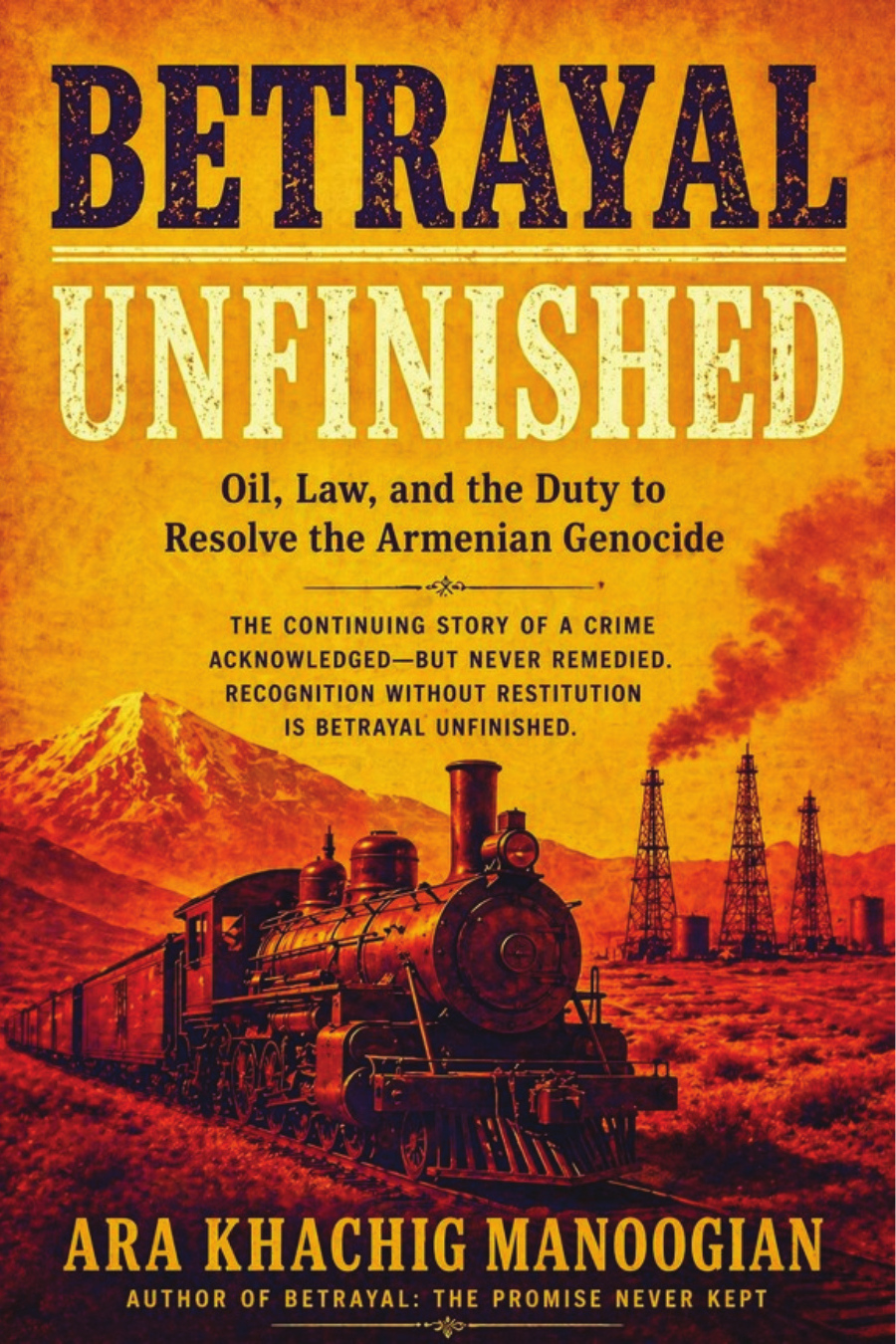
Read the companion white paper, Western Azerbaijan: A Conspiracy Against the Armenian People, free on our Patreon. The full book is available now in our bookstore in paperback and eBook.
Global Peace International is dedicated to fostering peace, dialogue, and cooperation among people of all nations, cultures, and beliefs.
We publish books, white papers, and resources that help people understand the roots of conflict and the practice of peace — grounded in history, law, and evidence.
We bring individuals and communities together across borders, faiths, and cultures to build relationships grounded in mutual respect and shared truth.
We equip lawmakers, advocates, educators, and citizens with the tools and frameworks to become peacebuilders in their own communities.
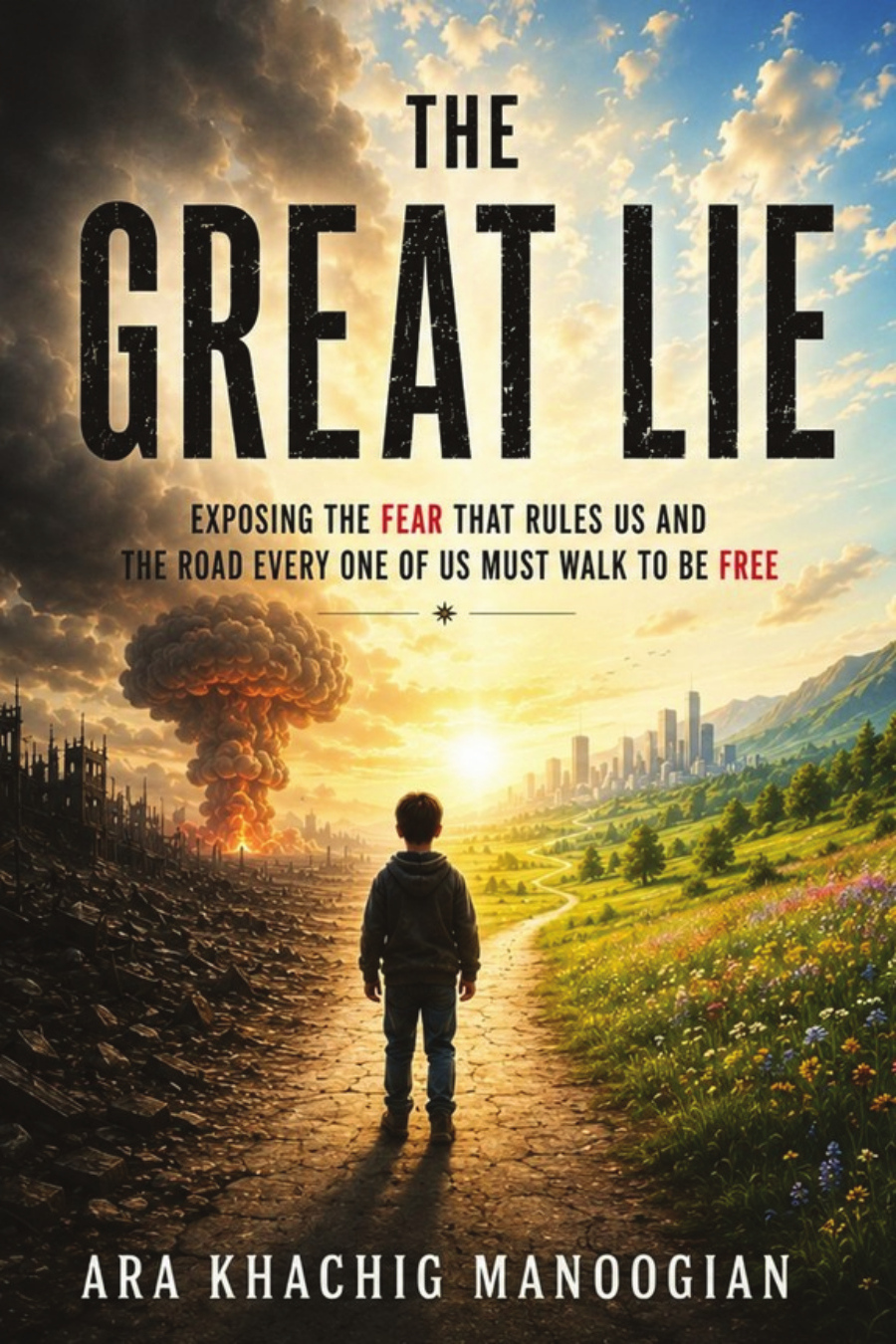

Support our peace education and research. Every contribution — of time, voice, or resources — helps build a more peaceful, more honest world.